
In the modern Aussie workplace, the most dangerous piece of equipment isn't a forklift or a power tool. It isn't a slippery floor in the kitchen.
It’s the office chair.
"Sitting disease" is a genuine issue now. We are seeing a massive spike in what physiotherapists call "Tech Neck" (or Anterior Head Carriage, if you want to be technical). That’s the forward head posture you get from leaning towards a screen, staring at a phone, or hunching over a laptop for 8 to 10 hours a day.
For HR Leaders and Safety Officers, this isn't just a "health and well-being" fluff piece. It’s a financial risk. Musculoskeletal disorders (MSDs) are a leading cause of Workers' Compensation claims in Australia.
But here is the good news: You don't have to wait for the claims to come in. A proactive corporate wellness program can stop these issues before they turn into paperwork.
Enter Corporate Pilates. Unlike general fitness classes that just aim to get your heart rate up, Pilates is a corrective exercise. It was literally designed to realign the spine and undo the damage of modern life.
Understanding the "Desk Posture" Trap
To understand why your staff are complaining of migraines and back pain, you have to look at the mechanics. The human head weighs about 5kg. When it sits directly on top of the spine, it’s balanced.
But for every inch your head moves forward (to stare at a screen), the load on your neck doubles. By the time you are hunched over a laptop, your neck muscles are holding up the equivalent of a 20kg weight.
When an employee sits at a desk all day, a predictable pattern emerges, known as "Upper Crossed Syndrome":
Shoulders Roll Forward: The Pectorals (chest muscles) get tight and short.
Upper Back Weakens: The Rhomboids and Traps (back muscles) get overstretched and weak.
Hip Flexors Tighten: Sitting shortens the front of the hips, which pulls the lower back into compression.
Glutes Switch Off: We call this "gluteal amnesia." Because you are sitting on them, your glutes forget how to work, leading to lower back instability.
You can’t just "wish" this posture away. And standing desks aren't a silver bullet either (people just tend to lean or slouch while standing). You have to physically strengthen the opposing muscles to fix it.
How Corporate Pilates Fixes the Slump
This is where Corporate Pilates shines. It is the antidote to the desk hunch.
At Movement Assembly, our certified trainers don't just run a generic "abs class." We design sequences that specifically target these problem areas for office workers.
1. Thoracic Extension (Opening the Book)
The antidote to hunching forward is extending backward. We include exercises that open the chest and mobilise the thoracic spine. This reverses that "hunchback" look and allows the lungs to expand fully again.
2. Deep Core Activation (The Internal Corset)
Most people think "core" means "six-pack." But in Pilates, we focus on the Transversus Abdominis. This is the deepest layer of abdominal muscle that wraps around your spine like a corset. When this is strong, it supports the lower back and relieves lumbar pain instantly.
3. Glute Strengthening (Waking Up the Rear)
Simple mat exercises, like bridges and clams, wake up those dormant glute muscles. Strong glutes stabilise the pelvis, which takes the pressure off the spine. It’s simple mechanics: if your glutes work, your back doesn't have to do all the heavy lifting.
A Strategic Investment in Retention
Let’s look at the softer side of the ROI. Investing in Corporate Pilates sends a powerful message to your staff.
It says: “We know this job is demanding. We know sitting at a desk is hard on your body. And we are willing to pay to help you look after yourself.”
In a tight talent market, employees are looking for corporate wellness programs that offer genuine value. A pizza party is nice, but it doesn't make their back feel better.
A weekly Pilates class is a solid financial perk. A single mat Pilates class in Sydney or Melbourne can easily cost $30 to $35. By offering this in-house, you are saving your employees over $1,500 a year in gym fees, plus the time cost of commuting to a studio.
When employees feel physically cared for, morale goes up. And when morale goes up, retention rates follow.
Safe, Inclusive, and Effective
One of the fears we hear from HR is inclusivity. “Will older staff feel left out? Is it too hard for people who are overweight?”
At Movement Assembly, we pride ourselves on being inclusive. We know that a Corporate Pilates class might include a 22-year-old triathlete and a 60-year-old with a dodgy knee.
Our "Open Level" method ensures everyone gets a safe workout. Our trainers are experts at providing:
Regressions: Easy modifications to make exercises accessible for beginners or anyone with injuries.
Progressions: Tougher challenges (like adding a pulse or a hold) to keep the fitness fanatics happy.
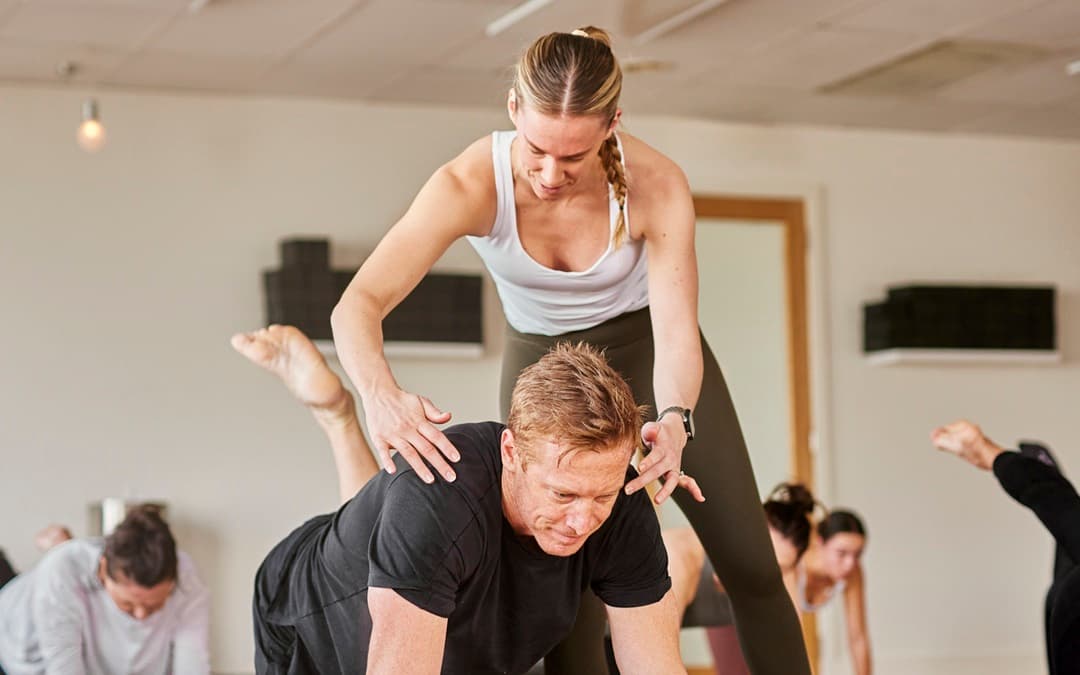
Tactile Cues: Professional guidance to ensure safe form and maximum benefit.
Strengthen Your Business from the Core
Healthy employees are productive employees. You can’t expect high performance from a brain that is distracted by chronic neck pain.
By addressing the physical root causes of pain and fatigue, you can build a more resilient workforce. It’s cheaper to buy yoga mats than it is to pay for rehab.
Don't wait for the WorkCover claims to pile up. Get on the front foot with your team's spinal health.